Parker
61
Fountain Pen
Filling System
Capillary Filler
Condition
Fair; shows significant oxidation on threads and potential clogging in the capillary unit
Estimated Value
$60 - $100 (due to condition and cleaning requirements)
Era
Vintage 1950s - 1960s
Pen Specifications
Pen Type
Fountain Pen
Filling System
Capillary Filler
Body Material
Resin / Lucite
Trim Material
Gold-Filled
Color / Pattern
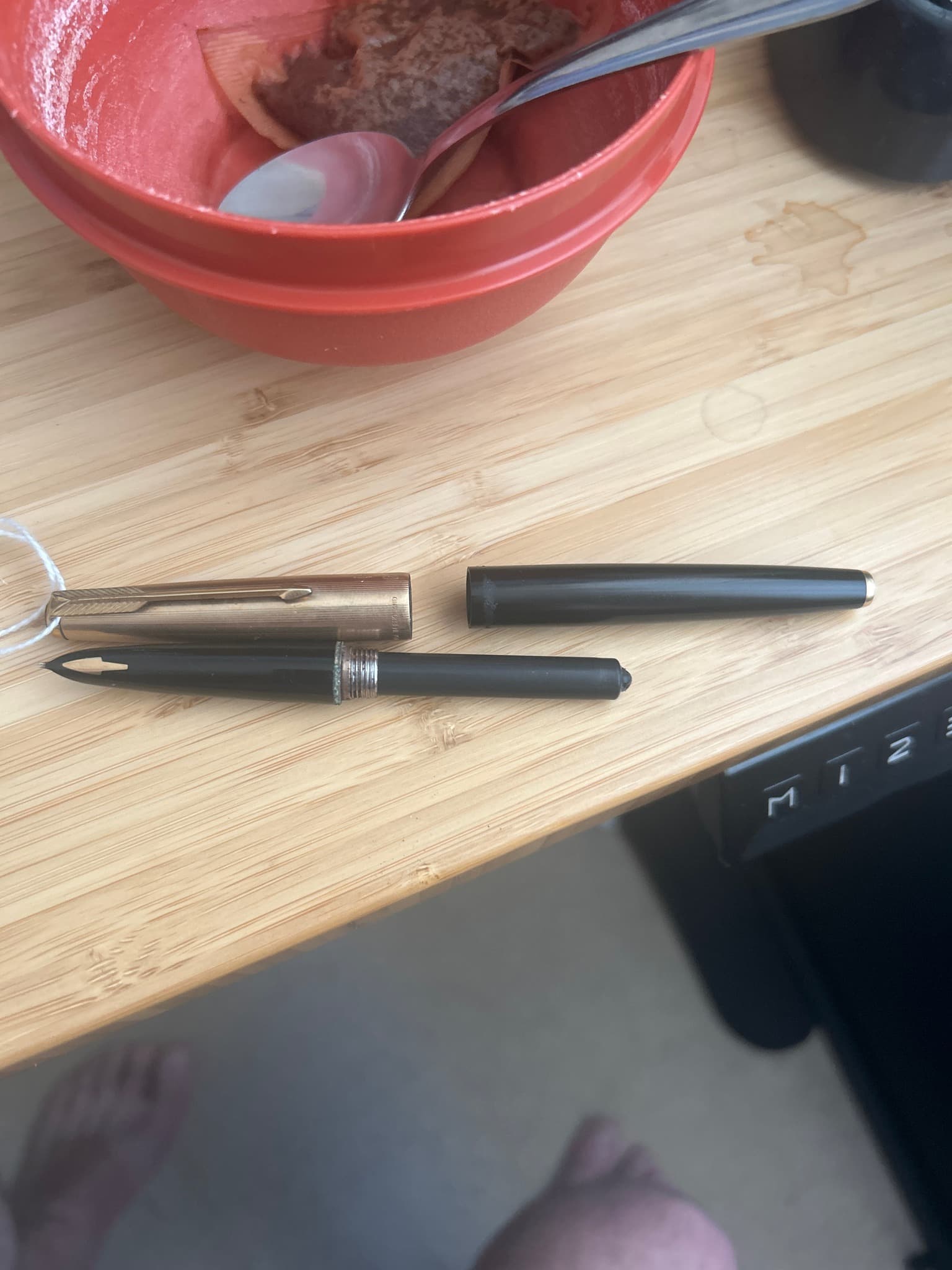
Black body with a Gold-filled Insignia/Custom cap
Cap Type
Slip Cap
Clip Design
Art Deco Arrow clip characteristic of Parker
Barrel Shape
Slim Torpedo/Tapered
Nib Details
Nib Material
14K Gold
Nib Size
Medium
Nib Type
Hooded Nib
Nib Condition
Good; the tip appears intact, though requires cleaning of historical ink residue
Dimensions
Size / Dimensions
Approx. 135mm capped, 127mm uncapped
Weight Estimate
Light, approx 18-20g, well-balanced
Heritage & Origin
Era / Period
Vintage 1950s - 1960s
Country of Origin
USA
Rarity
Common (Standard Black 61 model)
Condition & Value
Overall Condition
Fair; shows significant oxidation on threads and potential clogging in the capillary unit
Filling System Condition
Poor/Untested; capillary fillers often clog and are difficult to restore if not maintained
Estimated Value
$60 - $100 (due to condition and cleaning requirements)
Special Features
Unique capillary filling system; Arrow inlay on the hood (though missing or obscured in image); self-wicking technology
Ink Recommendations
Non-staining, dye-based inks like Parker Quink Blue or Waterman Serenity Blue
Care Recommendations
Do not soak the entire section for extended periods; use only distilled water for flushing; avoid pigmented or shimmering inks
Interesting Facts
The Parker 61 was advertised as a pen that 'fills itself' by immersion in ink without moving parts, using capillary action similar to a sponge
Overall Assessment
An iconic mid-century design representing Parker's leap into advanced filling technology, though this specimen requires restoration of the capillary unit and cleaning of the threaded sections.