Conklin
Crescent Filler (likely 20P or similar vintage model)
Fountain Pen
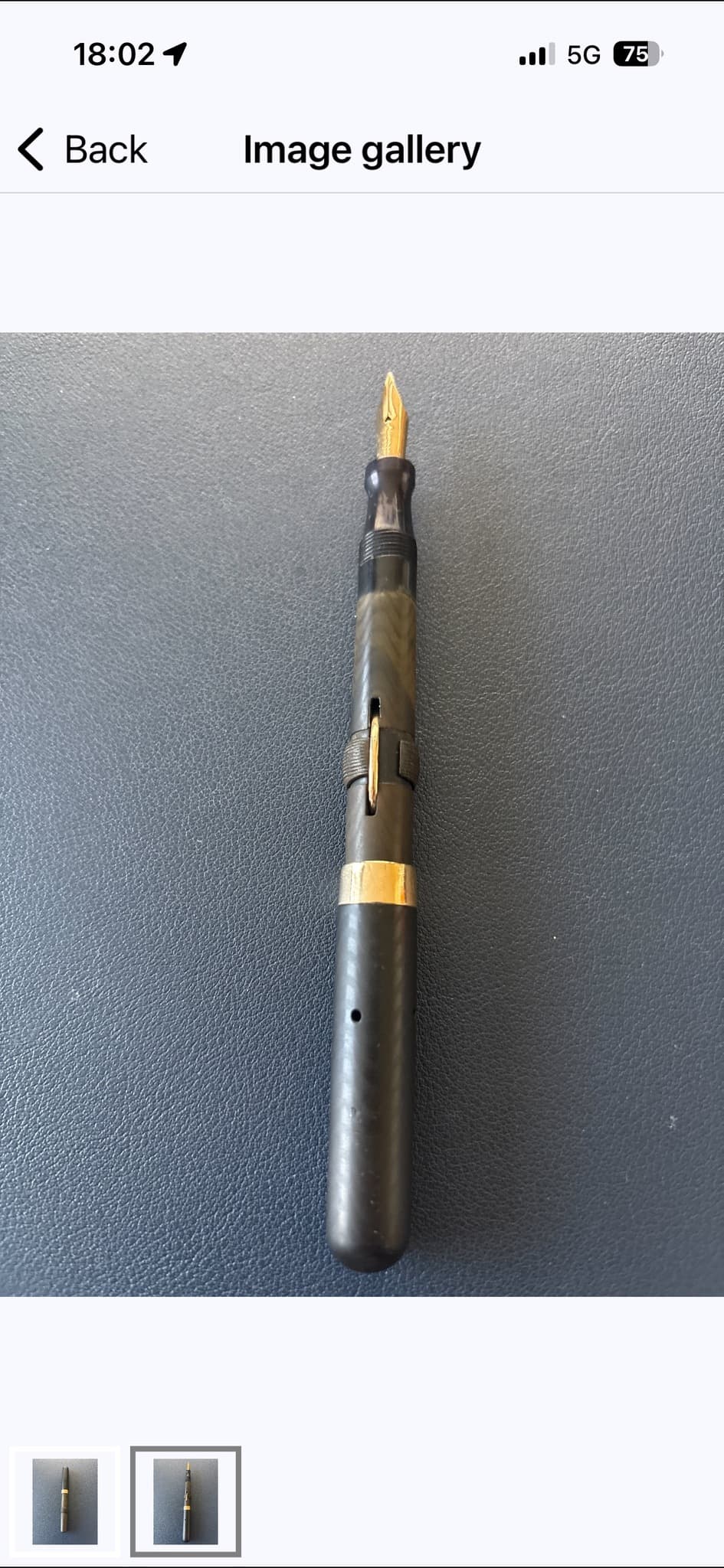
Filling System
Crescent Filler
Condition
Good vintage condition with some discoloration/oxidation typical of hard rubber of this age
Estimated Value
150 - 300 USD depending on exact model and nib flexibility
Era
Vintage 1910s-1920s
Pen Specifications
Pen Type
Fountain Pen
Filling System
Crescent Filler
Body Material
Hard Rubber (Ebonite)
Trim Material
Gold-Filled
Color / Pattern
Black Mottled Hard Rubber (Chasing faded or smooth finish)
Cap Type
Screw Cap
Clip Design
Plain rigid clip or cap-less style depending on model variation; body features the iconic locking crescent mechanism
Barrel Shape
Cylindrical with rounded ends
Nib Details
Nib Material
14K Gold
Nib Size
Fine
Nib Type
Flex
Nib Condition
Appears well-aligned with good tipping, likely offers nice flexibility
Dimensions
Size / Dimensions
Approximately 130mm capped, standard vintage pocket to full size for the era
Weight Estimate
Lightweight, typical of vintage ebonite pens
Heritage & Origin
Era / Period
Vintage 1910s-1920s
Country of Origin
USA
Rarity
Uncommon
Condition & Value
Overall Condition
Good vintage condition with some discoloration/oxidation typical of hard rubber of this age
Filling System Condition
Crescent mechanism present; rubber sac would need replacement for full functionality
Estimated Value
150 - 300 USD depending on exact model and nib flexibility
Special Features
Patented Crescent Filler mechanism featuring the locking ring to prevent accidental depression
Ink Recommendations
Standard washable fountain pen inks; avoid permanent or heavily pigmented inks due to vintage sac filling system
Care Recommendations
Keep away from direct sunlight and excessive heat to prevent ebonite discoloration and degradation; hand wash only
Interesting Facts
Roy Conklin invented the self-filling Crescent Filler in 1901, famously endorsed by Mark Twain who praised it because it could not roll off a desk
Overall Assessment
A classic piece of early 20th-century American fountain pen history, highly collectible for its innovative filling mechanism and flexible gold nib