Matador
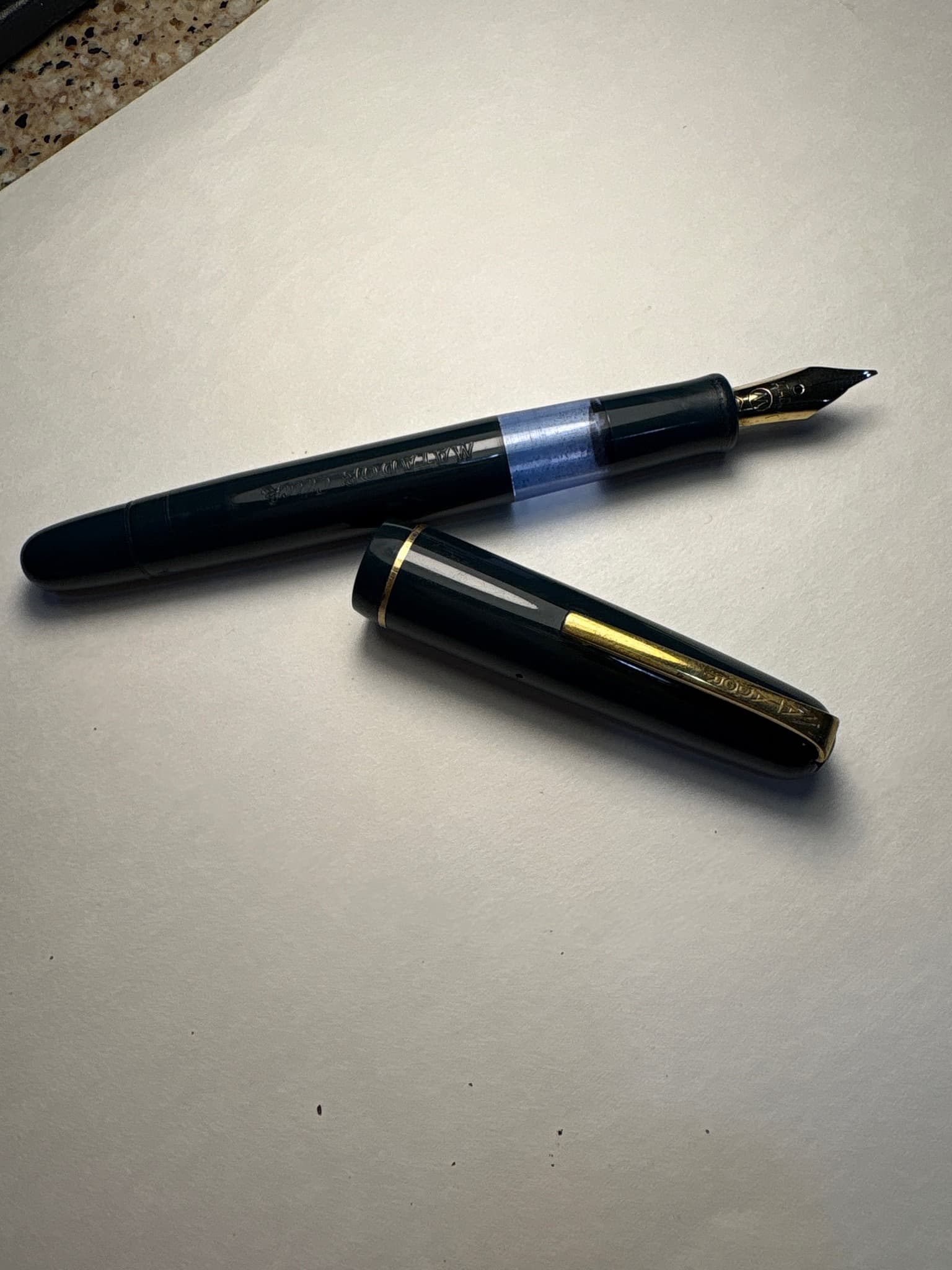
Click / Standard Model with Ink Window
Fountain Pen
Filling System
Piston Filler
Condition
Very Good vintage condition with expected micro-scratches and clear ink window showing minor discoloration
Estimated Value
150 - 300 USD
Era
Vintage 1930s-1950s
Pen Specifications
Pen Type
Fountain Pen
Filling System
Piston Filler
Body Material
Celluloid / Hard Rubber
Trim Material
Gold-Plated
Color / Pattern
Black with translucent blue ink window section
Cap Type
Screw Cap
Clip Design
Classic Matador curved gold clip with engraved branding
Barrel Shape
Cigar-Shaped / Torpedo
Nib Details
Nib Material
Gold-Plated Steel or Gold
Nib Size
Fine to Medium
Nib Type
Semi-Flex
Nib Condition
Good, clean tipping with typical semi-flex springiness
Dimensions
Size / Dimensions
Approximately 128mm capped, 120mm uncapped, standard vintage diameter
Weight Estimate
Lightweight, approx 15-18 grams
Heritage & Origin
Era / Period
Vintage 1930s-1950s
Country of Origin
Germany
Rarity
Uncommon
Condition & Value
Overall Condition
Very Good vintage condition with expected micro-scratches and clear ink window showing minor discoloration
Filling System Condition
Requires new piston seal / cork replacement for full restoration
Estimated Value
150 - 300 USD
Special Features
Distinctive semi-translucent blue barrel ink window characteristic of mid-century German piston fillers
Ink Recommendations
Standard dye-based fountain pen inks such as Waterman Serenity Blue or Pelikan 4001
Care Recommendations
Handle with care due to vintage celluloid age, service piston seal with appropriate silicone grease, avoid modern iron-gall inks
Interesting Facts
Matador was a prominent German pen manufacturer known for high-quality alternatives to Montblanc and Pelikan during the golden age of European fountain pens
Overall Assessment
A charming and collectible vintage German piston filler featuring a distinctive ink window design, highly desirable for collectors of historical European writing instruments.